

The Frugality Ceiling: Why Cutting Lattes Caps Out and How to Shift to an Earning Expansion Mindset
Discover how to break through the frugality ceiling. Overcome frugality burnout, escape scarcity thinking, and unlock uncapped income expansion.

Educational Resource: This guide does not constitute financial or legal counsel.
Direct Answer: Breaking through the frugality ceiling requires recognizing that expense reduction has a hard mathematical floor of zero, whereas earning potential is theoretically uncapped. You make this cognitive transition by redirecting the daily mental energy previously spent on micro-savings (like clipping coupons or tracking small purchases) toward acquiring high-leverage skills, building equity assets, and negotiating higher compensation.
For over two decades, mainstream personal finance advice has repeated the exact same tired script: stop buying morning lattes, cancel your Netflix subscription, cut your own hair, and track every single penny in a spreadsheet.
In the initial stages of financial recovery, strict budgeting is genuinely helpful. It reins in impulse spending, forces awareness, and creates an initial emergency cash cushion.
However, millions of ambitious individuals eventually hit a wall: frugality burnout.
They spend forty-five minutes driving across town to save four dollars on discount fuel. They agonize over buying an eight-dollar book that could advance their career. Their entire relationship with money becomes governed by anxiety, fear, and scarcity.
Understanding how to break through the frugality ceiling is the pivotal turning point in every wealth builder’s journey.
Cutting expenses can only take you so far. Once you eliminate obvious waste, continuing to squeeze your lifestyle yields diminishing returns while exhausting your most valuable cognitive assets. Real, enduring wealth is created on the offensive side of the ledger.
Here is why extreme frugality breaks down, how to audit the hidden cost of penny-pinching, and the exact psychological steps to transition from scarcity to aggressive income expansion.
Beyond Frugality: Shifting Your Focus from Micro-Savings to Macro-Earnings
Shifting from micro-savings to macro-earnings redirects your limited daily focus from defensive cost-cutting to offensive value creation.
When you operate entirely within a frugality framework, your universe is constrained by contraction. You view money as a finite, shrinking resource that must be defended at all costs. Every financial decision is framed around what you must sacrifice or do without.
- Frugality Mindset: Finite Capital ➔ Constant Sacrifice ➔ Cognitive Exhaustion ➔ Hard Ceiling.
- Expansion Mindset: Uncapped Value ➔ Skill Acquisition ➔ Asymmetric Income ➔ Exponential Wealth.
When you transition to an earning expansion mindset, you recognize that capital flows toward value, problem-solving, and leverage. Instead of spending an hour contemplating whether you can afford an online course, you evaluate the acquisition of skills as an asset that will generate cash flow for the next twenty years.
You stop asking: “How can I spend less today?” and begin asking: “How can I produce more value tomorrow?”
The Math of Asymmetry: Why Expenses Have a Floor but Income Has No Ceiling
The mathematical foundation of income expansion is based on asymmetry: your expenses cannot drop below zero, but your income potential has zero theoretical ceiling.
Consider the absolute limits of cost reduction. If an individual earns $60,000 per year and cuts their living expenses down to the bone (eating basic staples, living with multiple roommates, eliminating entertainment), the absolute mathematical maximum they can save is $60,000 per year. Even in an impossible scenario where living costs reach zero dollars, that remains your ceiling.
In reality, basic biological survival dictates that expenses can rarely be trimmed by more than 20% to 30% without severely degrading your physical health, mental focus, and professional network.
| Financial Dimension | The Defensive Path (Extreme Frugality) | The Offensive Path (Income Expansion) |
|---|---|---|
| Mathematical Boundary | Hard lower floor ($0 / survival baseline) | Theoretically infinite / uncapped |
| Effort to Return Ratio | Diminishing returns (each extra $10 saved requires greater pain) | Compounding returns (each new skill amplifies existing leverage) |
| Primary Resource Burned | Mental bandwidth, social relationships, willpower | Creativity, strategic thinking, skill acquisition |
| Long-Term Psychological State | Chronic anxiety, fear of loss, scarcity mindset | Abundance, self-efficacy, calculated risk tolerance |
| Wealth Generation Speed | Linear and slow (takes 30–40 years to accumulate) | Asymmetric and rapid (can double or triple income in 2–5 years) |
Compare that hard ceiling against income expansion. There is no statutory law that limits your annual earnings to $60,000. Through specialized knowledge, software automation, equity ownership, and strategic positioning, your earning power can double to $120,000, climb to $300,000, or expand into seven figures.
Defending a fixed pie is an exhausting, losing strategy; expanding the size of the pie is where generational wealth is built.
The Psychological Cost of Frugality Burnout (Decision Fatigue and Scarcity Anxiety)
Frugality burnout exhausts human willpower through relentless micro-decisions, leaving individuals with depleted executive function for high-stakes career moves.
Human beings possess a finite reservoir of cognitive energy each day, known in behavioral psychology as ego depletion. Every time you force yourself to make a financial trade-off (comparing grocery prices down to the cent, debating whether to purchase a brand-name item, calculating parking fees), you drain a fraction of that energy reserve.
Spending three hours of mental focus to save $15 on a flight ticket leaves your brain too exhausted in the evening to prepare for a promotion interview, learn a programming language, or pitch an enterprise consulting client. You are trading valuable creative bandwidth for pocket change.
When you spend that willpower on trivial micro-savings, you enter a state of chronic scarcity anxiety:
- Risk Aversion Paralysis: You become so terrified of losing a dollar that you refuse to invest in basic career tools, professional conferences, or health optimization.
- Relational Strain: Financial anxiety spills over into your personal relationships, creating friction with partners over inconsequential household expenses.
- Lost Vision: You lose the ability to see broad macroeconomic opportunities because your vision is permanently glued to the pavement looking for dropped coins.
Auditing Your Time ROI: Are You Spending $50 of Energy to Save $3?
Conducting a time return-on-investment (ROI) audit calculates your true hourly rate and prevents you from performing low-value tasks that masquerade as productivity.
To break out of the scarcity loop, you must establish an Effective Hourly Rate (EHR). Take your desired annual income (for example, $150,000) and divide it by 2,000 working hours. Your time is worth $75 per hour.
Now, audit your weekly habits against that standard:
- Do you spend 40 minutes driving to a distant grocery store to save $8 on groceries? You just paid yourself $12/hour to perform manual labor, forfeiting $50 of potential high-value time.
- Do you spend two hours assembling cheap flat-pack furniture when a professional tasker could complete it for $40 while you work with clients?
- Do you manually clean your house for five hours every weekend instead of outsourcing to a cleaning service so you can write, study, or rest?
If an activity yields less than your target hourly rate, performing it is not “saving money”: it is a net destruction of your earning potential.
The 3 Phases of Wealth Acceleration: Defensive, Stabilization, and Aggressive Expansion
Wealth acceleration progresses sequentially through three distinct phases: initial defense, financial stabilization, and aggressive income expansion.
You cannot skip steps in your financial evolution. Attempting aggressive expansion while swimming in high-interest credit card debt will destabilize your household. The key is knowing when to graduate from one phase to the next:
- Phase 1 (Defensive): Stop financial bleeding and build a 1-month cash cushion.
- Phase 2 (Stabilization): Automate investments, retire high-interest debt, and establish a 6-month emergency buffer.
- Phase 3 (Aggressive Expansion): Acquire asymmetric leverage, scale top-line income, and shift energy from saving to investing.
Phase 1: The Defensive Phase (Survival & Cleanup)
- Primary Objective: Plug cash leaks and stop compounding debt.
- Focus: Cut unnecessary subscriptions, eliminate high-interest revolving credit cards, and establish an initial $1,000 to $2,000 cash emergency buffer.
- Mindset: Strict expense awareness and budgeting discipline.
Phase 2: The Stabilization Phase (Autopilot Systems)
- Primary Objective: Build a fortress balance sheet and automate wealth.
- Focus: Maintain a 6-month liquid emergency fund in a high-yield savings account or Treasury bills. Automate standard retirement contributions into low-cost index funds.
- Mindset: Set your financial foundation on autopilot so it runs without daily micromanagement.
Phase 3: The Aggressive Expansion Phase (Uncapped Growth)
- Primary Objective: Maximize top-line revenue through skill acquisition and capital deployment.
- Focus: Acquire high-income digital or executive skills, launch side ventures, negotiate equity compensation, and build scalable digital products.
- Mindset: Eliminate penny-pinching entirely. Protect your energy, delegate low-value tasks, and embrace strategic, calculated risks.
Re-Allocating Cognitive Bandwidth: From Penny-Pinching to High-Leverage Skills
Re-allocating cognitive bandwidth involves deliberately rechanneling your mental focus from cost elimination into acquiring skills that carry market pricing power.
The modern digital economy rewards specialized knowledge that cannot be easily automated or outsourced. When you free up ten hours a week from clipping coupons and bargain hunting, invest that freed time directly into high-leverage capabilities:
- High-Stakes Sales and Negotiation: Learning to negotiate contracts, close enterprise deals, or command top-of-market compensation packages will generate more net wealth in a single 30-minute conversation than a lifetime of avoiding coffee shops.
- Technical and Product Architecture: Mastering full-stack development, AI system integration, or cloud infrastructure positions you at the center of high-margin corporate value chains.
- Persuasive Writing and Media Distribution: The ability to articulate complex business problems through clear written prose creates distribution leverage that operates 24 hours a day on the internet.
The Earning Expansion Workbook: Identifying 3 Monetizable Competencies
Use this practical 3-step audit exercise to uncover your most profitable skills and construct an immediate income-expansion offer:
| Step in the Workbook | Core Reflection & Discovery Question | Practical Action Item |
|---|---|---|
| Audit 1: The Problem Inventory | What complex problems do coworkers, clients, or industry peers consistently ask you to solve for them? | List 5 recurring questions you answer effortlessly that leave others overwhelmed |
| Audit 2: The Outcome Packaging | What tangible financial or operational outcome can you deliver to a business in under 10 hours of work? | Frame your skill around an explicit outcome (e.g., “Cut monthly cloud hosting costs by 30%”) |
| Audit 3: The Pilot Offer | What is a simple, packaged consulting sprint you can offer to two pilot clients this month? | Create a 1-page PDF proposal offering an operational audit for a flat $1,500 fee |
Frequently Asked Questions
Why does extreme budgeting stop working after a certain point?
Extreme budgeting stops working because expenses have a hard physical floor required for basic survival, and continuously obsessing over micro-savings causes decision fatigue, depletes creative energy, and yields diminishing financial returns.
How do I overcome the fear of spending money on myself after years of frugality?
Overcome this fear by categorizing expenditures into two clear buckets: consumption expenses (which depreciate and yield zero return) and investment expenses (books, courses, coaching, health tools) that directly compound your earning power and future capital.
Can anyone transition from a saving mindset to an income expansion mindset?
Yes, transitioning requires shifting your daily attention from defensive restriction to offensive value creation, systematically identifying problems in the marketplace, and developing skills that solve those problems for profit.
Should I abandon my budget completely when focusing on earning more?
No, you should not abandon basic financial awareness; instead, automate your savings and fixed living expenses so that your baseline needs are met passively, freeing your conscious mental energy to focus entirely on income growth.
How do I know if I am experiencing frugality burnout?
You are experiencing frugality burnout if you feel chronic anxiety when purchasing basic daily necessities, find yourself arguing with loved ones over minor expenses, or spend hours of valuable time attempting to save insignificant amounts of pocket change.
Final Thoughts: Play to Win Instead of Playing Not to Lose
Extreme frugality is a defensive game: it teaches you how to lose slowly. Income expansion is an offensive game: it teaches you how to win decisively.
You cannot pinch your way to generational wealth. The most successful entrepreneurs, investors, and professionals do not obsess over the cost of an espresso: they obsess over the magnitude of the problems they are solving and the leverage they command in the marketplace.
Begin your transition today. Put your basic living expenses and index fund contributions on automatic deduction, retire the penny-pinching spreadsheets, and learn how to break through the frugality ceiling. Commit your cognitive energy to expanding your capabilities, scaling your income, and designing a life of genuine abundance.
Download: The 20 Mental Models Strategic Decision Matrix
A tactical guide to second-order thinking, probabilistic forecasting, and maintaining stoic composure under high-stakes market pressure.
- First-principles problem breakdown worksheets
- Cognitive bias detection & risk checklist
This article and its associated calculators are for educational and informational purposes only and do not constitute financial, investment, legal, tax, or medical advice. We may earn an affiliate commission on third-party links at zero cost to you. Always consult a licensed professional before making major financial, health, or investment decisions. Read our full Legal & Financial Disclaimer.
Rohan Kulkarni
Verified AuthorRohan writes about decision-making, mental clarity, and money psychology. He focuses on how our daily thinking patterns and emotions influence our financial and life choices.
Was this essay valuable to you?
Help us refine our editorial focus and research priorities.
Reader Discussion (2)
Extremely well-articulated analysis on capital compounding. The breakdown on equity allocation vs active income is spot on.
The distinction between looking rich and building real moats is something more founders need to study deeply.
Explore Eternity Empire
Search empirical insights, explore our four wisdom categories, and discover curated strategic essays.
Search Insights
Recent Essays
The Backyard Cash Flow Engine: How to House Hack with an ADU in 2026
11 min read • Oct 20How to Become a Fractional COO: Landing Your First $5,000/Month Retainer Client
12 min read • Oct 20The Zero-Bounce Outbound Engine: How to Set Up Multi-Domain Cold Email with Instantly and Clay
12 min read • Oct 20Featured Guides
Further Wisdom & Insights
Explore All Articles
The Cost of Saying Yes: How to Set Financial Boundaries with Family Without Guilt
Learn how to set financial boundaries with family without guilt. Use proven scripts, diagnostic checklists, and budget caps to stop enabling money stress.

The Six-Figure Paradox: Understanding Money Dysmorphia and Why High Earners Still Feel Broke
Overcome money dysmorphia signs and recovery barriers. Learn why high earners feel broke, calibrate wealth against census data, and heal financial anxiety.
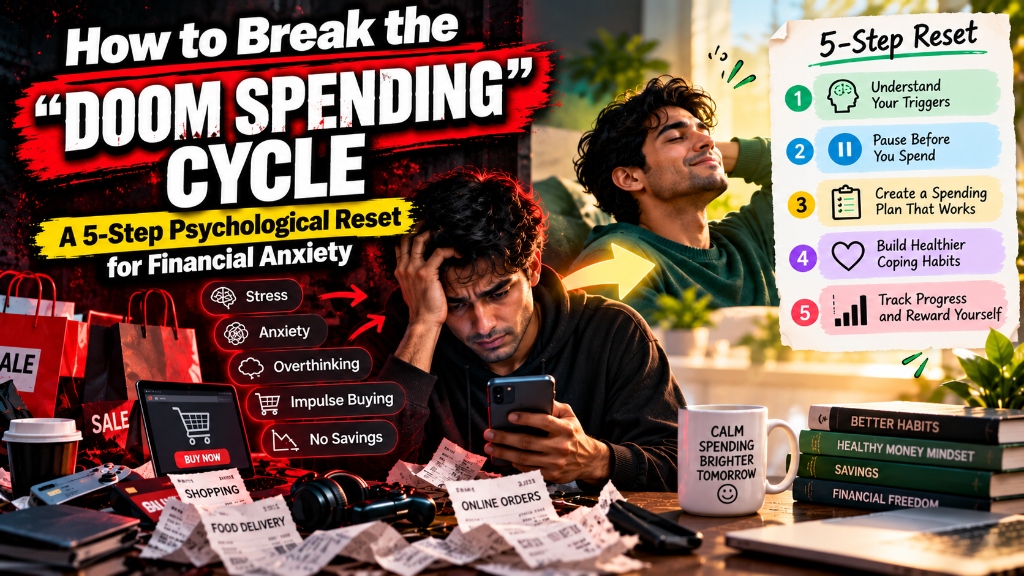
How to Stop Doom Spending: A 5-Step Reset for Financial Anxiety
Learn how to stop doom spending when economic anxiety hits. Master the 72-hour friction rule, emotional trigger resets, and loud budgeting habits.