

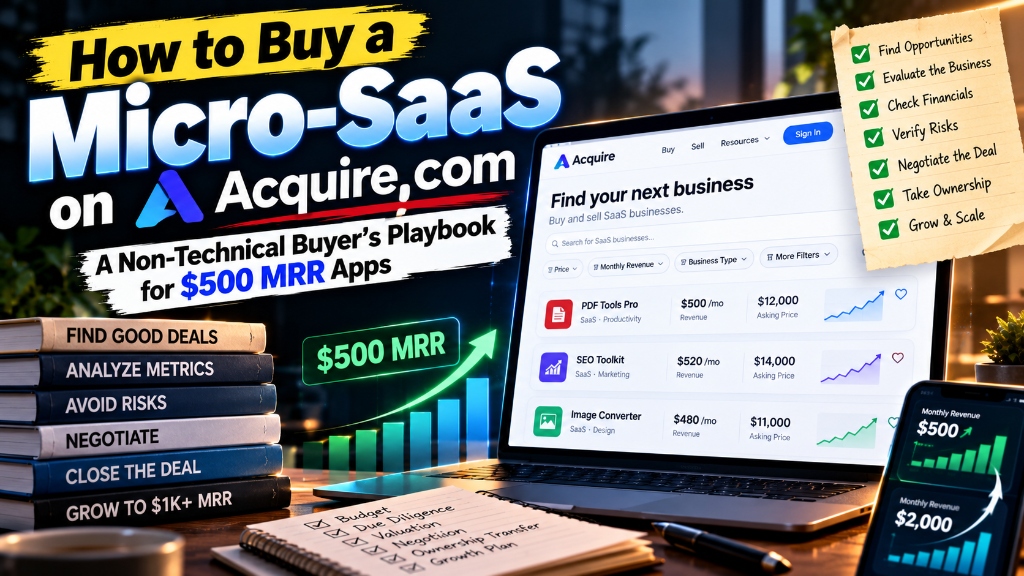
How to Buy a Micro-SaaS on Acquire.com: A Non-Technical Buyer’s Playbook for $500 MRR Apps
Learn how to buy a micro SaaS on Acquire.com without coding. Master non-technical due diligence, Stripe audits, LOI structuring, and escrow closings.
Educational Resource: This guide does not constitute financial or legal counsel.
Direct Answer: Buying a micro-SaaS on Acquire.com as a non-technical entrepreneur involves acquiring validated, cash-flowing software generating $300 to $1,000 monthly recurring revenue (MRR) for a 2x to 3.5x annual revenue multiple. You mitigate technical risk by verifying Stripe integrations directly, hiring a freelance contract developer for a code review, and utilizing escrow safeguards during asset transfer.
Building a software business from scratch is one of the most punishing endeavors in entrepreneurship.
You can spend eight months coding, refine a landing page for weeks, and launch on Product Hunt only to be met with dead silence and zero paying customers. Most failed software projects do not fail because the code was broken: they fail because the founder built something nobody actually wanted to pay for.
This brutal reality has triggered a major shift among solo operators and digital marketers: buying existing cash-flowing micro-SaaS apps instead of building from zero.
Learning how to buy a micro saas on acquire com allows you to skip the terrifying “idea validation” phase entirely. By targeting small apps generating $300 to $1,000 in monthly recurring revenue (MRR), you acquire a functioning codebase, verified paying customers, and real feedback for the price of a modest used car ($10,000 to $25,000).
You do not need to be a full-stack software engineer to pull this off. Here is the step-by-step non-technical buyer’s playbook for finding undervalued micro-SaaS gems on Acquire.com, running ruthless due diligence, and closing the deal safely.
Why Buying Existing Software Beats Starting from Scratch in 2026
Acquiring an existing micro-SaaS eliminates the product-market fit gamble by providing immediate revenue, historical user data, and working third-party integrations from day one.
The traditional software startup model forces founders to burn months of emotional energy on product discovery, user interviews, and custom development. When you acquire a micro-SaaS that is already processing subscription billing on Stripe, your starting line is fundamentally different:
-
Traditional Build Model: Ideation ➔ 6 Months Coding ➔ Marketing Launch ➔ Zero Paying Users (High Failure Risk).
-
Acquisition Fast-Track: Buy $500 MRR App ➔ Verified Product Demand ➔ Focus 100% on Marketing and Growth (Asymmetric Upside).
-
Immediate Feedback Loop: You can interview real customers who have willingly swiped their credit card for the past six months, asking them what features they need and why they use the product.
-
Engineered Asset Value: Even if you choose to sell the software two years later at the exact same MRR, software valuations maintain liquid market demand on digital marketplaces.
-
Pure Growth Focus: As a non-technical owner, you spend 0% of your time debugging syntax errors and 100% of your time on search engine optimization, outbound sales, customer onboarding, and content marketing.
Setting Your Acquisition Scope: Target MRR, Tech Stacks, and Multiple Ranges (2x–4x ARR)
Defining a precise acquisition criteria prevents you from overpaying or taking on technically unmanageable architectures.
When browsing listings on Acquire.com, novice buyers often chase flashy $10,000 MRR listings that command $350,000 valuations and require engineering teams. A non-technical solo buyer should target the neglected middle tier: small apps earning between $300 and $1,500 MRR.
| Valuation & Metric Parameter | Target Criteria for Non-Technical Buyers | Red Flag Warning Signs |
|---|---|---|
| Monthly Recurring Revenue (MRR) | $300 to $1,200/month | Less than $100 MRR (essentially an unvalidated project) |
| Annual Run-Rate Multiple | 2.0x to 3.5x ARR (Annual Recurring Revenue) | Asking 6x+ ARR for a single-founder lifestyle app |
| Tech Stack Architecture | Modern, standardized frameworks (Next.js, Tailwind, Supabase, Laravel) | Obscure custom frameworks or undocumented legacy code |
| Customer Concentration | Largest single customer represents less than 15% of MRR | One enterprise client represents 60%+ of total revenue |
| Monthly Operating Costs | Under 20% of MRR (server hosting, databases, APIs) | Heavy third-party API costs that eat 70% of gross margin |
At a $500 MRR level, the business generates $6,000 in Annual Recurring Revenue (ARR). At a standard 2.5x to 3.0x multiple, the fair market purchase price sits between $15,000 and $18,000. This makes the deal accessible to individual buyers without complex bank financing.
The 4-Pillar Due Diligence Framework: Financial, Technical, Legal, and Operational
A comprehensive due diligence framework systematically audits financial truth, codebase health, intellectual property ownership, and daily maintenance overhead.
Never take a seller’s pitch deck at face value. Before making a formal offer, evaluate the target across four distinct pillars:
1. Financial Diligence
Request read-only “Viewer” access to the seller’s Stripe, ProfitWell, or Baremetrics dashboard. Look at historical billing cohorts:
- Is revenue truly recurring, or is it inflated by one-off lifetime deals sold on AppSumo?
- What is the net churn rate? If the app loses more than 8% of its user base every month, you are buying a leaky bucket.
2. Technical Diligence (The Non-Technical Workaround)
You do not need to read code yourself: you simply need to hire someone who does. Spend $300 to $500 on Upwork or Gun.io to hire a senior software engineer who specializes in the app’s specific framework. Have them spend four hours reviewing the GitHub repository, running the app locally, and issuing an Architecture Health Scorecard. They will tell you if the code is modular and clean, or a tangled mess that will break the moment you touch it.
3. Legal and Intellectual Property Diligence
Verify that the founder owns 100% of the code. If they hired offshore contractors to build modules, did those contractors sign binding Assignment of Intellectual Property agreements? If not, a former contractor could legally claim ownership of the codebase after you buy it.
4. Operational Diligence
Ask the seller to track their actual working hours for two weeks:
- How many hours per week do they spend on customer support tickets?
- Are servers hosted on accessible cloud platforms (like Vercel, Supabase, or AWS), or custom bare-metal servers that require continuous maintenance?
Uncovering Churn Traps and Fake Stripe Proof
Detecting artificial revenue spikes and unsustainable customer turnover protects your capital from being dumped into an abandoned project.
Unfortunately, digital asset marketplaces occasionally attract sellers looking to dump failing projects. Watch out for these three common deception tactics:
Sellers can easily manipulate Stripe dashboards by running their own personal credit cards through the checkout system or invoicing friendly corporate accounts to fabricate “MRR.” Always verify that payments originate from unique, diverse customer IP addresses with realistic historical subscription patterns.
The AppSumo “Ghost MRR” Trap
A seller lists an app reporting $800 MRR, but deep inspection reveals that 80% of their “active users” bought a $49 lifetime deal on a promotional marketplace twelve months ago. Lifetime deal users consume server resources and submit support tickets while generating $0.00 in ongoing monthly revenue.
The Looming Third-Party API Price Hike
Many micro-SaaS tools are simple wrappers built around external AI APIs (like OpenAI) or proprietary data scrapers. Check the app’s API usage costs. If the app charges customers $20/month but burns $16/month in third-party API calls, any pricing adjustment from the upstream API provider will immediately plunge your business into negative cash flow.
Structuring the Offer: Letter of Intent (LOI) and Escrow Closing Safeguards
Structuring your purchase through a formal Letter of Intent (LOI) and closing through a licensed escrow service guarantees that funds are only released after assets are safely transferred.
Once you are satisfied with your initial review, submit an official LOI through the Acquire.com platform. A disciplined LOI should include three protective stipulations:
- Exclusivity Period: A 21-day exclusivity window where the seller agrees to pause all discussions with competing buyers while you complete deep diligence.
- Post-Closing Founder Support: A mandatory 30-day handover period where the seller agrees to provide 10 to 15 hours of video support, bug fixes, and operational guidance.
- Closing Holdback / Escrow Milestone: Rather than releasing 100% of funds on day one, structure the transaction via Escrow.com with an inspection period:
- The Escrow Closing Protocol: Sign Asset Purchase Agreement ➔ Deposit 100% of Funds into Escrow ➔ Complete Code and Domain Transfer ➔ 7-Day Inspection Period ➔ Escrow Releases Funds to Seller.
During the 7-day escrow inspection period, you must verify that you have full administrative control of the domain DNS, GitHub repositories, Stripe merchant account, hosting environments, and customer support email inboxes.
Post-Purchase Day 1–30: Retention, Quick Wins, and Outreach to Inactive Users
The first 30 days post-acquisition should focus entirely on customer retention, onboarding audits, and personalized founder outreach to unlock immediate growth.
Once the escrow service clears and the asset is officially yours, resist the temptation to build major new features immediately. Your initial month is about stabilization and relationship building:
Week 1: The Personal “New Owner” Email
Send an honest, personal email to every single paying customer from your personal inbox:
“Hi [Name], my name is [Your Name], and I recently acquired [Software Name]. I love what [Founder] built, and my primary focus over the next six months is to make the product faster, more reliable, and better suited to your workflow. What is the single most frustrating bug or missing feature you encounter when using our app?”
This single email builds immense goodwill, prevents subscription cancellations, and hands you an exact roadmap of high-impact improvements.
Week 2: Win-Back Campaigns for Cancelled Users
Export the list of users who cancelled their subscriptions over the previous six months. Send a win-back email offering a 30% discount or asking why they left. Converting just 5 out of 100 past users instantly boosts your baseline MRR by 10% to 20% in week two.
Week 3–4: Fix Pricing and Optimize Landing Pages
Most developer-founders underprice their software drastically. If the app charges $9/month, test a new $19/month tier with updated annual plans. Updating the value proposition copy on the homepage and adding basic SEO schema markup will frequently double conversion rates without changing a single line of backend code.
Frequently Asked Questions
How much should I pay for a 500 MRR micro-SaaS?
For a micro-SaaS generating $500 MRR ($6,000 ARR), a fair market price typically ranges between $12,000 and $18,000, representing a 2.0x to 3.0x annual recurring revenue multiple depending on churn rates and growth trajectory.
Can I run a micro-SaaS if I don’t know how to code?
Yes, non-technical owners can successfully manage a micro-SaaS by handling marketing, content, SEO, and customer support themselves while retaining a trusted freelance developer on a modest hourly retainer for code updates and bug fixes.
How does Acquire.com protect buyers during the transaction?
Acquire.com protects buyers by integrating identity verification, standardized legal agreements (such as Asset Purchase Agreements), and integrated escrow transaction processing to ensure funds are not released until all digital assets are confirmed.
What are the best questions to ask a founder before making an offer?
Ask the founder why they are selling, how they acquired their first 20 paying customers, how many hours per week they spend on customer support, and what specific marketing channels they tested that failed.
How long does the micro-SaaS acquisition process take?
From the moment you first message a seller on Acquire.com to the final release of escrow funds, a smooth micro-SaaS acquisition typically takes between 14 and 30 days.
Final Thoughts: Growth Through Strategic Ownership
You do not need to be a Silicon Valley coder to build wealth in the software economy. The world is filled with brilliant engineers who can build remarkable technology but lack the patience or marketing skill to distribute it.
By mastering how to buy a micro saas on acquire com, you position yourself as the growth catalyst. You acquire an asset with established product-market fit, apply relentless marketing execution, and scale predictable, recurring cash flow.
Create your free buyer profile on Acquire.com this week, set your filters to software tools generating under $1,000 MRR, and begin evaluating listings with a disciplined, analytical eye.
Download: The Solo Founder's High-Margin Scaling Playbook
A battle-tested blueprint on building asymmetric leverage, packaging high-ticket B2B services, and converting labor into scalable digital products.
- Pricing power & contract negotiation scripts
- Micro-SaaS & digital product launch checklist
This article and its associated calculators are for educational and informational purposes only and do not constitute financial, investment, legal, tax, or medical advice. We may earn an affiliate commission on third-party links at zero cost to you. Always consult a licensed professional before making major financial, health, or investment decisions. Read our full Legal & Financial Disclaimer.
Vikram Nair
Verified AuthorVikram covers small business ideas, digital ventures, and practical company growth. Having worked alongside early-stage founders, he writes straightforward advice on building profitable businesses.
Was this essay valuable to you?
Help us refine our editorial focus and research priorities.
Reader Discussion (2)
Extremely well-articulated analysis on capital compounding. The breakdown on equity allocation vs active income is spot on.
The distinction between looking rich and building real moats is something more founders need to study deeply.
Explore Eternity Empire
Search empirical insights, explore our four wisdom categories, and discover curated strategic essays.
Search Insights
Recent Essays
The Backyard Cash Flow Engine: How to House Hack with an ADU in 2026
11 min read • Oct 20How to Become a Fractional COO: Landing Your First $5,000/Month Retainer Client
12 min read • Oct 20The Zero-Bounce Outbound Engine: How to Set Up Multi-Domain Cold Email with Instantly and Clay
12 min read • Oct 20Featured Guides
Further Wisdom & Insights
Explore All Articles
Best Side Hustles to Make Money Online in 2026: 15 Realistic Ideas
Discover the 15 best side hustles to make money online in 2026. Compare startup costs, required skills, earning potential, and time to first income.
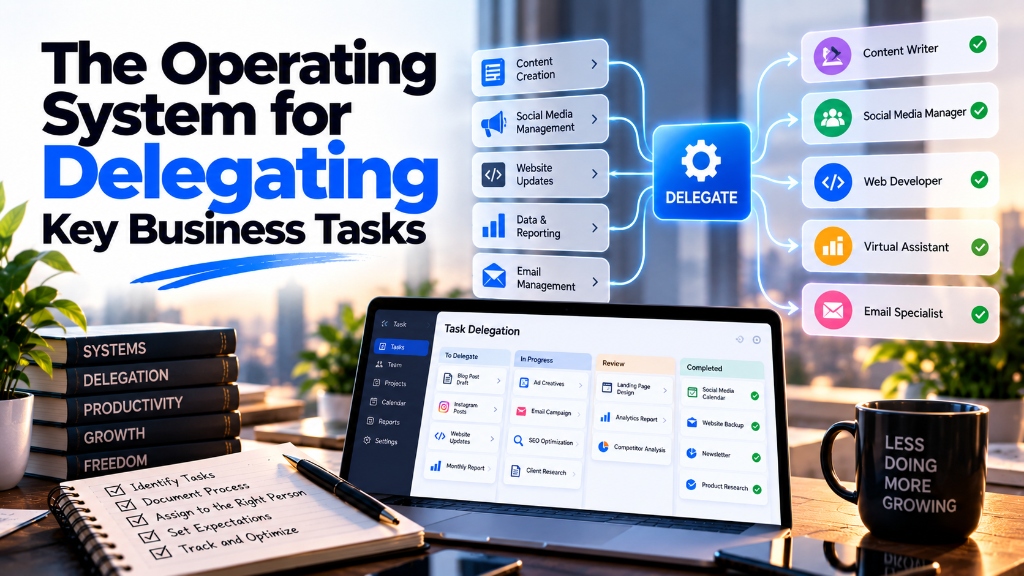
The Operating System for Delegating Key Business Tasks
How entrepreneurs delegate operational tasks effectively using outcome-based accountability, SOP documentation, and async workflows.
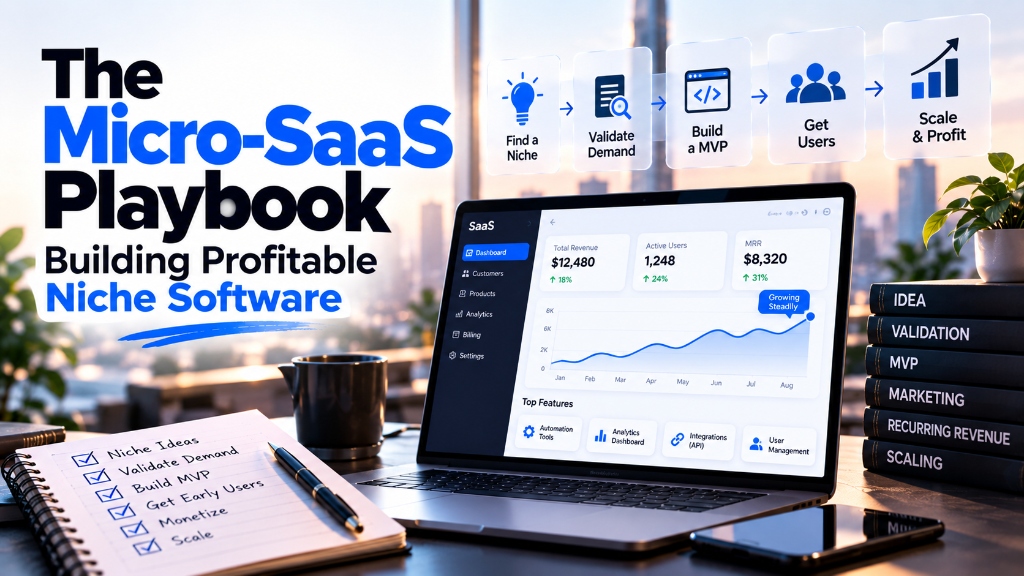
The Micro-SaaS Playbook: Building Profitable Niche Software
How solo developers and small teams build, launch, and scale high-margin niche software products to $10k+ recurring monthly revenue.