

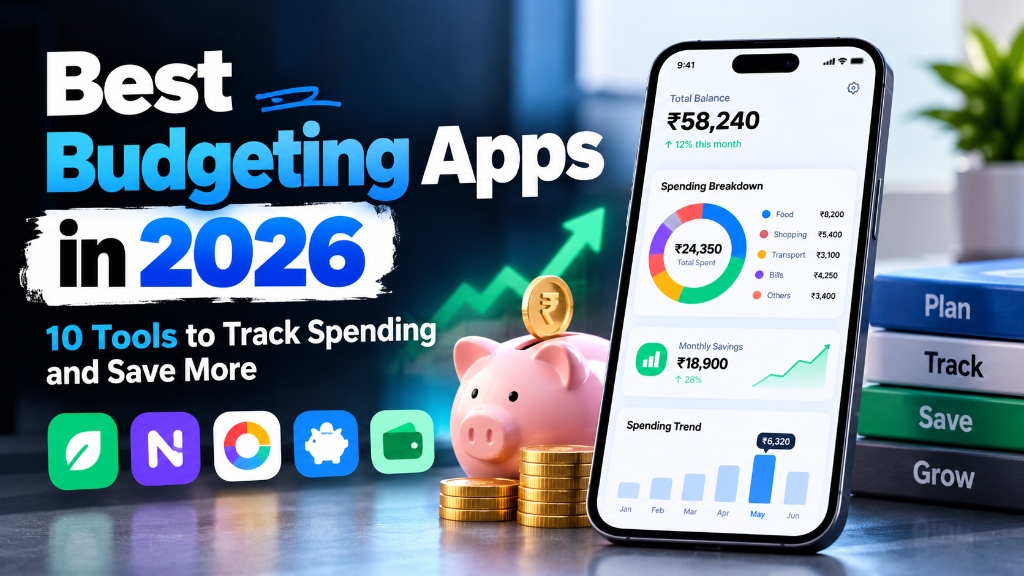
Best Budgeting Apps in 2026: 10 Tools to Track Spending and Save More
Compare the 10 best budgeting apps in 2026. Explore features, pricing, automated tracking, and zero-based budgeting tools to grow your savings.
Educational Resource: This guide does not constitute financial or legal counsel.
The best budgeting apps in 2026 are YNAB for proactive zero-based budgeting, Monarch Money for comprehensive household tracking, Copilot Money for AI-powered Mac and iOS users, and Empower for free net worth monitoring. Choosing the right tool depends on whether you prefer hands-on transaction allocation or passive automated reporting.
Managing personal cash flow in 2026 requires more than a passive monthly backward glance at your credit card bill.
The best budgeting apps in 2026 give you forward-looking clarity over every dollar or rupee entering your accounts. With subscription creep, digital payments, and fluctuating investment values pulling at your attention, manual spreadsheets often break down within three weeks. Modern budgeting applications bridge this gap by connecting directly to your bank feeds, flagging recurring charges, and helping you allocate capital toward high-priority savings targets.
Whether you need a strict zero-based budget that assigns every cent a job or an automated expense tracker that runs quietly in the background, this guide analyzes the ten top tools available today.
What Are the Best Budgeting Apps in 2026?
The best budgeting apps in 2026 combine automated bank aggregation, intelligent expense categorisation, proactive cash-flow forecasting, and multi-device synchronization.
Rather than merely recording what you spent two weeks ago, modern software emphasizes intentional spending. Some platforms operate on zero-based budgeting, forcing you to allocate existing funds before spending a single dollar. Other applications prioritize wealth tracking, displaying your liquid cash alongside retirement portfolios, mortgage liabilities, and real estate assets.
The ideal tool matches your psychological style: disciplined planners thrive with proactive software, while busy professionals usually prefer automated dashboards that highlight spending anomalies without requiring daily manual input.
Top 10 Budgeting Apps in 2026: At a Glance
The following comparison table outlines the leading budgeting platforms, their primary target audience, pricing models, and key trade-offs.
| Budgeting App | Best For | Pricing (2026) | Bank Syncing Method | Primary Strength | Main Limitation |
|---|---|---|---|---|---|
| YNAB (You Need A Budget) | Strict cash allocation | $14.99/mo or $109/yr | Plaid, MX, File Import | Eliminates overdrafts and living paycheck-to-paycheck | Steep learning curve for beginners |
| Monarch Money | Household collaboration | $14.99/mo or $99.99/yr | Plaid, Finicity, MX | Multi-user sharing and custom investment tracking | Requires paid subscription; no free tier |
| Copilot Money | Apple ecosystem users | $13/mo or $95/yr | Plaid, MX | Intuitive machine-learning transaction tagging | Limited strictly to iOS and macOS devices |
| Empower (Personal Capital) | High-net-worth investors | Free | Plaid, Yodlee | In-depth retirement planner and fee analyzer | Weak envelope budgeting features |
| Simplifi by Quicken | Flexible monthly spending plans | $3.99/mo to $5.99/yr billed annually | Direct financial institution sync | Clean cash-flow projection charts | No desktop standalone application |
| Goodbudget | Digital envelope budgeting | Free tier, or $10/mo / $80/yr | Manual entry (Free); sync (Plus) | Excellent discipline for couples sharing cash pots | Manual entry can feel tedious |
| EveryDollar | Ramsey-style zero-based budgeting | Free tier, or $17.99/mo / $79.99/yr | Plaid (Premium only) | Clean, straightforward zero-sum categories | Premium tier is relatively expensive |
| Fold Money | UPI & Indian bank account tracking | Free basic, ₹199/mo Pro | Account Aggregator (RBI-approved) | Clean bank statement analysis without SMS scraping | Limited global asset support |
| PocketGuard | Preventing accidental overspending | Free tier, or $12.99/mo / $74.99/yr | Plaid, Finicity | “In My Pocket” metric shows true disposable cash | Custom reporting is somewhat rigid |
| Wally | International multi-currency budgets | Free core, $8.99/mo Gold | Global open-banking connectors | Supports 200+ currencies and foreign accounts | Interface takes time to customize |
In-Depth Reviews of the 10 Best Budgeting Tools
Selecting the right financial platform depends on how much time you want to spend inside the software and what specific financial problems you need to solve.
1. YNAB (You Need A Budget): The Gold Standard for Zero-Based Budgeting
YNAB is the most effective application for eliminating credit card debt and ending the paycheck-to-paycheck cycle because it requires you to allocate only the money you currently have in hand.
Instead of projecting theoretical future income, YNAB adheres to four core rules: give every dollar a job, embrace your true expenses by breaking large irregular bills into monthly targets, roll with the punches when you overspend in a category, and age your money so you spend cash earned thirty days ago.
The software connects securely to thousands of financial institutions, automatically imports transactions, and provides detailed spending reports. The trade-off is a steep initial learning curve. Users must reconcile accounts regularly, but those who persist consistently report saving thousands of dollars within their first six months.
YNAB (You Need A Budget)
The Gold Standard for Zero-Based Cash Allocation
- Enforces strict zero-based budgeting to eliminate overspending
- Comprehensive bank account sync with thousands of global lenders
- Proven track record: average user saves $600 in first two months
- Steeper learning curve than passive dashboard apps
- Requires regular account reconciliation to maintain accuracy
Eligible referral link. We may earn a commission at zero cost to you.
2. Monarch Money: The Modern Alternative for Couples and Families
Monarch Money is the best collaborative financial platform in 2026, offering joint accounts, customizable dashboards, and multiple bank data aggregators to eliminate sync failures.
Founded by former Mint product leaders, Monarch allows two partners to connect their individual and joint accounts under one subscription without sharing login credentials. You can set shared family savings goals, categorize spending with custom tags, track investment holdings, and generate net worth forecasts.
If Plaid experiences connectivity errors with your credit union, Monarch lets you switch the backend connector to Finicity or MX with a single click. While it lacks a permanent free tier, its speed, polished interface, and desktop web app make it worth the annual price.
Monarch Money
The Premier Multi-User & Household Financial Hub
- Two users can sync individual and shared accounts under one subscription
- Multiple data aggregators (Plaid, Finicity, MX) to resolve sync errors
- Comprehensive net worth, investments, and custom category tracking
- No permanent free tier after the trial expires
- Advanced custom rules can take time to configure
Eligible referral link. We may earn a commission at zero cost to you.
3. Copilot Money: Sleek Machine Learning for Apple Users
Copilot Money delivers the highest level of automated transaction intelligence for individuals who manage their finances through an iPhone, iPad, or Mac.
Copilot monitors your recurring subscriptions, flags unexpected price increases, and uses local machine-learning models to predict expense categories with impressive accuracy. The user interface feels lightweight and responsive, featuring interactive charts, customizable recurring expense calendars, and Amazon itemization features.
The core drawback is platform exclusivity: Android and Windows users cannot use Copilot. For devoted Apple users, however, it remains the most aesthetic and friction-free tracking system available.
4. Empower Personal Dashboard: Best Free Tool for Investment and Net Worth Tracking
Empower Personal Dashboard is the premier free financial dashboard for individuals with accumulated savings who want to monitor retirement accounts, asset allocation, and investment fees.
While its daily envelope budgeting tools are relatively basic, Empower excels at macro-level tracking. The platform automatically aggregates 401(k) plans, IRAs, brokerage accounts, bank accounts, and mortgages into a unified net worth statement. Its built-in investment fee analyzer scans your mutual funds and exchange-traded funds to calculate how much expense ratios will cost your portfolio over thirty years.
The software is completely free because Empower utilizes the tool as a pipeline to offer paid wealth advisory services to users with more than $100,000 in investable assets. You can decline advisory calls and use the software without paying a penny.
5. Simplifi by Quicken: Best for Flexible Cash-Flow Projections
Simplifi by Quicken provides a flexible monthly spending plan that calculates your disposable income after accounting for fixed bills, debt payments, and savings goals.
Unlike strict zero-based budgeting platforms that demand manual assignment of every single purchase, Simplifi keeps things simple: it computes what is safe to spend this week based on your projected bills. The app provides custom watchlists to track specific spending categories, such as dining out or online shopping, alerting you before you exceed your target.
At an affordable annual price point, Simplifi strikes a practical balance between automated convenience and active financial control.
6. Goodbudget: Digital Envelope Budgeting for Disciplined Savers
Goodbudget digitizes the traditional paper-envelope budgeting technique, making it an excellent choice for visual spenders and couples who want to set hard spending caps on discretionary categories.
You create virtual envelopes for groceries, entertainment, fuel, and utilities. As you log transactions, the envelope balances deplete in real time. The platform syncs seamlessly between iOS, Android, and web browsers, allowing household partners to know exactly how much cash remains in the dining envelope before placing a dinner order.
The free tier offers ten regular envelopes and ten more for annual expenses. Upgrading to Goodbudget Plus unlocks unlimited envelopes, historical transaction reports, and multi-device account syncing.
7. EveryDollar: Simplified Zero-Sum Budgeting
EveryDollar provides a simple, clean implementation of zero-based budgeting based on Dave Ramsey’s baby steps framework.
Users begin each month by entering their expected income and subtracting expenses, debt payments, and savings until the balance equals zero. The free version requires manual transaction entry, which encourages acute awareness of daily spending habits. The premium version connects to bank accounts for automated transaction importing and budget tracking.
While EveryDollar lacks the deep investment analysis tools found in Monarch or Empower, its uncluttered interface makes it appealing to financial beginners who want straightforward debt-payoff planning.
8. Fold Money: Best Account Aggregator for Indian Bank Accounts and UPI
Fold Money is a purpose-built personal finance app for users in India, utilizing the Reserve Bank of India (RBI) Account Aggregator framework to track multi-bank balances and transactions securely.
Unlike traditional expense managers that rely on reading invasive SMS text messages, Fold connects directly to institutional banking APIs with user consent. It categorizes transactions from ICICI, HDFC, SBI, Axis, and other major lenders, providing clear breakdowns of recurring utility payments, investments, and UPI spending.
Fold is fast, respects user privacy, and avoids intrusive display advertisements. If your primary financial activity revolves around Indian banking rails and UPI payments, Fold is a standout choice in 2026.
9. PocketGuard: The Safest Tool to Stop Accidental Overspending
PocketGuard prevents users from overdrawing their accounts by calculating a single daily number: your “In My Pocket” spending limit.
The application automatically identifies your paycheck schedule, subtracts recurring bills and upcoming subscription charges, factors in your designated emergency fund contributions, and tells you exactly how much cash remains for guilt-free discretionary purchases.
PocketGuard also includes a bill negotiation assistant that identifies potential savings on cable, internet, and mobile phone plans. For individuals who struggle with mathematical budgeting frameworks, the single-number clarity of PocketGuard is exceptionally helpful.
10. Wally: Multi-Currency Tracking for Global Citizens and Expats
Wally is designed for frequent travelers, remote workers, freelancers, and expatriates who manage financial accounts across multiple countries and currencies.
The application connects to financial institutions across 70 countries and supports more than 200 global currencies, automatically converting overseas transactions into your home reporting currency at real-time exchange rates. Wally includes document scanning for paper receipts, bill reminders, and shared group budgeting for shared accommodation or travel expenses.
If your income arrives in US dollars while your living expenses are paid in euros, British pounds, or Indian rupees, Wally simplifies cross-border currency conversion tracking.
Free vs Paid Budgeting Apps: Is a Subscription Worth It?
A paid budgeting app subscription is worth the investment if its proactive rules or automated bank syncing save you more money than the annual fee costs.
Free applications like Empower Personal Dashboard provide tremendous value for net worth monitoring, but they offer minimal friction when you overspend on discretionary categories. In contrast, paid software such as YNAB ($109 per year) or Monarch Money ($99.99 per year) justifies its subscription price by providing reliable bank connectors, multi-user accounts, continuous feature updates, and zero advertisement monetization.
If a paid application prevents two impulse purchases or catches three unwanted recurring subscriptions per year, it has paid for itself. However, if your budget is extremely tight, starting with a free tool or a simple manual spreadsheet is the wisest initial move.
How to Choose the Right Budgeting App for Your Goals
To choose the right budgeting app, evaluate whether you need behavioral modification, passive net worth monitoring, or multi-user coordination.
- If you carry high-interest credit card debt: Choose YNAB. Its zero-based methodology stops you from spending future money and forces disciplined debt pay-down.
- If you manage household finances with a partner: Choose Monarch Money. Its dual-user login and multi-aggregator infrastructure make household collaboration seamless.
- If you want macro net worth tracking without paying fees: Choose Empower Personal Dashboard. It delivers superior investment fee analysis and retirement modeling.
- If you bank primarily in India with heavy UPI usage: Choose Fold Money to capitalize on RBI-regulated account aggregator data feeds.
- If you find complex spreadsheets overwhelming: Choose PocketGuard to focus strictly on your safe-to-spend daily discretionary balance.
Frequently Asked Questions
Which budgeting app is best for beginners in 2026?
Simplifi and PocketGuard are the best budgeting apps for beginners because they calculate your safe-to-spend balance automatically without requiring hours of manual setup.
Are budgeting apps safe to connect to bank accounts?
Yes, reputable budgeting applications are safe because they use read-only bank connections through financial aggregators like Plaid and MX with 256-bit bank-grade encryption, meaning no one can move your money.
What is the best free alternative to Mint in 2026?
Empower Personal Dashboard is the best free alternative to Mint for high-level net worth and investment tracking, while the free tier of EveryDollar or Goodbudget works well for day-to-day cash budgeting.
Does YNAB really save you money?
Yes, YNAB reports that average new users save more than $600 in their first two months and over $6,000 during their first year by forcing deliberate allocation of existing cash reserves.
Can budgeting apps track cryptocurrency and investments?
Yes, platforms like Monarch Money, Empower, and Copilot Money integrate directly with major crypto exchanges and brokerage houses to track digital assets alongside cash accounts.
Strategic Takeaway and Next Steps
The best budgeting app is whichever tool you open consistently enough to stay accountable to your financial goals.
Do not overcomplicate your setup on day one. Select one application that matches your immediate priority, whether that is debt reduction, household alignment, or investment tracking. Take advantage of free 14-day or 30-day trial periods to link your primary accounts and test transaction accuracy. Once your financial dashboard is configured, pair your daily spending tracking with our comprehensive how to save money guide to turn newly captured surplus cash into lasting wealth.
Download: The 2026 Wealth Compounding & FIRE Planning Toolkit
Our complete spreadsheet model and 28-page strategic handbook covering asset allocation buckets, Indian inflation adjustments, and long-term SIP compounding.
- Interactive FIRE & Net Worth Excel/Sheets model
- Asset allocation & emergency reserve matrix
This article and its associated calculators are for educational and informational purposes only and do not constitute financial, investment, legal, tax, or medical advice. We may earn an affiliate commission on third-party links at zero cost to you. Always consult a licensed professional before making major financial, health, or investment decisions. Read our full Legal & Financial Disclaimer.
Aditya Singhania
Verified AuthorAditya writes about investing, saving habits, and smart money management. With a background in financial planning, he helps readers build simple, reliable wealth habits for the long run.
Was this essay valuable to you?
Help us refine our editorial focus and research priorities.
Reader Discussion (2)
Extremely well-articulated analysis on capital compounding. The breakdown on equity allocation vs active income is spot on.
The distinction between looking rich and building real moats is something more founders need to study deeply.
Explore Eternity Empire
Search empirical insights, explore our four wisdom categories, and discover curated strategic essays.
Search Insights
Recent Essays
The Backyard Cash Flow Engine: How to House Hack with an ADU in 2026
11 min read • Oct 20How to Become a Fractional COO: Landing Your First $5,000/Month Retainer Client
12 min read • Oct 20The Zero-Bounce Outbound Engine: How to Set Up Multi-Domain Cold Email with Instantly and Clay
12 min read • Oct 20Featured Guides
Further Wisdom & Insights
Explore All Articles
AI Money Management Tools: Can AI Help You Budget, Save and Invest Smarter?
Discover the best AI personal finance tools in 2026. Compare AI expense tracking, automated savings, spreadsheet assistants, privacy risks, and real limitations.

How to Use ChatGPT & Claude for Personal Finance: 15 Copy-Paste Prompts
Master personal finance using ChatGPT and Claude. Discover 15 ready-to-run prompts for expense audits, zero-based budgeting, and net worth forecasting.
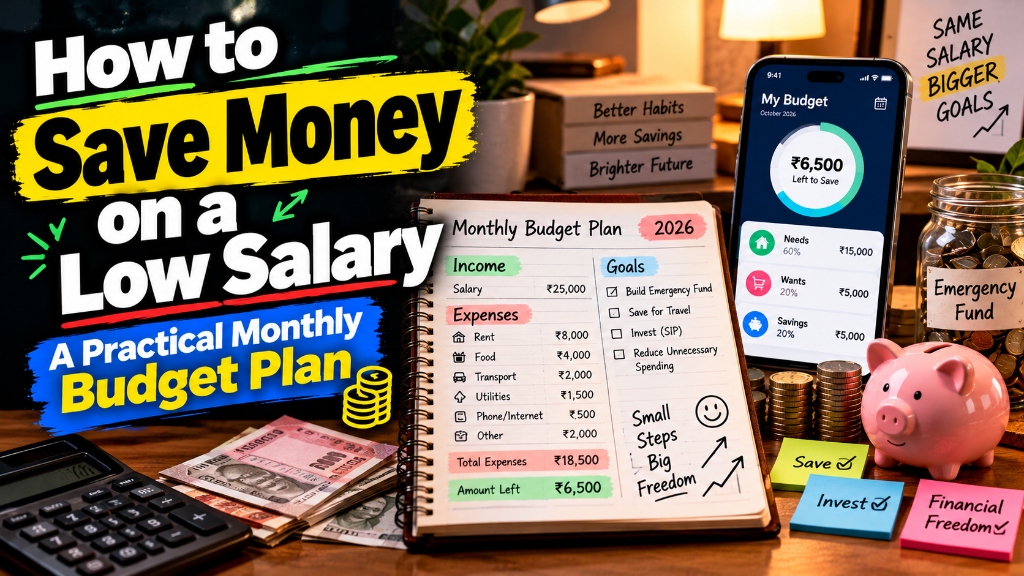
How to Save Money on a Low Salary: A Practical Monthly Budget Plan
Learn how to save money on a low salary with a realistic monthly budget plan. Includes sample budget templates, expense reduction tactics, and savings automation.