

Index Fund Investing for Beginners: The 3-Fund Portfolio (2026)
Master index fund investing with the simple 3-fund portfolio in 2026. Learn exact Vanguard, Fidelity, and Schwab tickers, age allocations, and tax placement.
Educational Resource: This guide does not constitute financial or legal counsel.
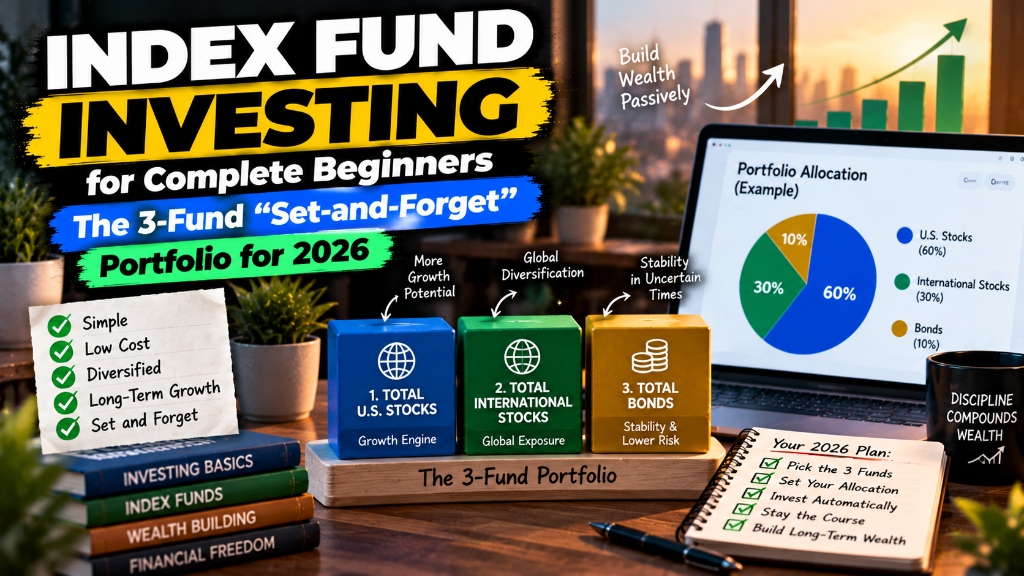
The 3-fund portfolio for beginners in 2026 is a low-cost, set-and-forget investment strategy that captures the growth of the entire global economy through three broad index funds: a US total stock market index, an international total stock index, and a total bond market index. It provides total diversification, near-zero management expense ratios, and outperforms over 85% of actively managed Wall Street funds over long horizons.
Investing in the stock market often feels intentionally intimidating.
Financial news networks broadcast frantic stock tickers, social media influencers tout speculative crypto tokens and options contracts, and wealth managers demand 1% to 2% annual advisory fees to pick complex mutual funds. The underlying message is always the same: building wealth requires relentless forecasting, deep market analysis, and constant trading.
Empirical market data shows the exact opposite: the more frequently you trade, the worse your investment results become.
Pioneered by Vanguard founder John Bogle and refined by the Bogleheads investment community, the 3-fund portfolio for beginners 2026 strips away the complexity. With just three low-cost index funds, you can own shares in over 10,000 profitable companies across 45 countries alongside sovereign and corporate bonds.
You do not need to analyze balance sheets, monitor quarterly earnings reports, or time market cycles. Here is how to construct a resilient, automated 3-fund portfolio in under an hour at Vanguard, Fidelity, or Charles Schwab.
The Core Principle: Why Simple Indexing Outperforms Active Trading Over Decades
Broad market indexing outperforms active portfolio management because minimal fees, broad diversification, and zero trading friction allow compound interest to work unimpeded.
According to the authoritative S&P Indices Versus Active (SPIVA) scorecard, over a 15-year investment horizon, more than 88% of professional active large-cap fund managers fail to beat the S&P 500 index. When you account for the 1.0% to 1.5% management fees and trading commissions charged by active funds, their long-term underperformance is nearly mathematical certainty.
| Investment Strategy | Expense Ratio | Year 30 Total Balance | Fees Paid to Fund Manager |
|---|---|---|---|
| Low-Cost Index Fund | 0.03% | $99,750 | $870 |
| Traditional Active Fund | 1.25% | $69,450 | $31,170 |
(Based on a $10,000 initial investment over 30 years with an 8% average annual return).
A seemingly small 1.25% annual management fee quietly confiscates over 30% of your total potential retirement nest egg over three decades.
By purchasing broad index funds that carry expense ratios below 0.05%, you keep virtually 100% of the market’s return for yourself.
The 3 Core Asset Classes: US Total Market, International Equities, and Total Bond
The 3-fund portfolio works by combining three non-correlated asset classes that balance aggressive growth with downside resilience.
| Core Asset Class | Target Exposure | Role in Portfolio |
|---|---|---|
| 1. Total US Stock Market Index | ~3,700 large, mid, and small-cap US firms | Primary capital appreciation engine |
| 2. Total International Stock Index | ~8,000 developed and emerging global companies | Geographic diversification and dollar hedge |
| 3. Total US Bond Market Index | Investment-grade US Treasuries and corporate bonds | Volatility buffer and capital preservation |
1. Total US Stock Market Index
This component represents the core growth engine of your portfolio. Unlike an S&P 500 fund (which holds only the 500 largest US companies), a Total US Stock Market index captures the entire domestic economy: mega-cap tech companies (Apple, Microsoft, Nvidia), mid-cap industrial leaders, and emerging small-cap innovators.
2. Total International Stock Market Index
While the US economy represents roughly 60% of total global market capitalization, the remaining 40% sits in developed international markets (Japan, the UK, Germany, Canada) and high-growth emerging economies (India, Brazil, Taiwan). Holding international equities provides geographic diversification, protecting your net worth against domestic dollar depreciations or regional economic downturns.
3. Total US Bond Market Index
Bonds are debt contracts that pay steady, contractual interest. This fund holds investment-grade US government Treasuries and high-grade corporate bonds. While equities drive long-term capital appreciation, bonds serve as your portfolio’s shock absorber, damping wild drawdowns during recessions and providing capital stability when rebalancing.
Exact Fund Ticker Directory: Matching Funds on Vanguard, Fidelity, and Schwab
You can construct a world-class 3-fund portfolio at any of the big three low-cost brokerage institutions using either Exchange-Traded Funds (ETFs) or traditional Index Mutual Funds.
| Brokerage Platform | Total US Stock Fund | Total International Stock Fund | Total US Bond Fund | Average Expense Ratio |
|---|---|---|---|---|
| Vanguard (ETFs) | VTI (0.03%) | VXUS (0.08%) | BND (0.03%) | ~0.04% |
| Vanguard (Mutual Funds) | VTSAX (0.04%) | VTIAX (0.12%) | VBTLX (0.05%) | ~0.06% |
| Fidelity (ETFs / Funds) | FSKAX (0.015%) | FTIHX (0.06%) | FXNAX (0.025%) | ~0.03% |
| Fidelity ZERO Funds | FZROX (0.00%) | FZILX (0.00%) | FXNAX (0.025%) | ~0.01% |
| Charles Schwab (ETFs) | SCHB (0.03%) | SCHF (0.06%) | SCHZ (0.03%) | ~0.04% |
| Charles Schwab (Mutual) | SWTSX (0.03%) | SWISX (0.06%) | SWAGX (0.04%) | ~0.04% |
ETFs vs. Index Mutual Funds: Which Should You Buy?
Both vehicles hold identical underlying stocks and cost almost nothing to own.
- Choose ETFs (like VTI, VXUS, BND) if you prefer intra-day trading flexibility, high tax efficiency in taxable brokerage accounts, or plan to change brokerage firms in the future without selling shares.
- Choose Mutual Funds (like VTSAX, FSKAX, SWTSX) if you want to set up automatic, recurring bank drafts for exact dollar amounts (e.g., $100 every Friday) without worrying about calculating fractional share purchases.
Choosing Your Allocation: Age-Based Guidelines for 20s, 30s, and 40s
Your personal asset allocation should reflect your investment time horizon and psychological tolerance for portfolio volatility.
If you are 25 years old and will not touch your retirement funds for 35 years, daily stock market dips do not matter; your primary priority is maximizing compounding equity growth. If you are 48 with children approaching college and a retirement date 12 years away, preserving accumulated capital with higher bond allocations becomes essential.
| Strategy & Age Bracket | US Stock (VTI / FSKAX) | Int’l Stock (VXUS / FTIHX) | US Bonds (BND / FXNAX) | Strategic Rationale |
|---|---|---|---|---|
| Aggressive Growth (20s & Early 30s) | 70% | 20% | 10% | Maximum equity exposure to capture decades of compounding |
| Balanced Wealth Builder (Late 30s & 40s) | 60% | 20% | 20% | Moderate bond allocation to buffer against major market drawdowns |
| Capital Preservation (50s+) | 50% | 20% | 30% | Substantial fixed-income buffer against sequence-of-returns risk |
A common rule of thumb is the “Age minus 10” rule for bonds: subtract 10 from your current age to find your baseline bond percentage. If you are 30 years old, allocate roughly 20% to bonds and 80% to total equities.
[!TIP] If you are testing retirement timelines and want to see how various annual return percentages compound over 20 to 30 years, experiment with our Eternity Empire Compounding Interest Calculator.
Tax-Efficient Placement: Roth IRA vs. 401(k) vs. Standard Brokerage
Where you hold each of your three funds across your different account types significantly impacts your long-term tax liability.
In financial planning, this is known as asset location. Different investment assets generate different types of taxable distributions:
| Account Type | Tax Classification | Recommended Asset Placement | Strategic Benefit |
|---|---|---|---|
| Roth IRA | Tax-free growth & withdrawals | US & International Equities (VTI, VXUS) | Maximizes compound growth free from future income taxes |
| Traditional 401(k) / IRA | Tax-deferred | Total Bond Market (BND, FXNAX) | Shields regular bond yield coupons from current-year ordinary tax |
| Taxable Brokerage | Capital gains & dividends | Total US Stock ETF (VTI) & International (VXUS) | Retains access to long-term capital gains rates and Foreign Tax Credits |
By placing your bond funds inside tax-deferred retirement accounts (like your traditional 401k or traditional IRA), you shelter the regular monthly interest payments from high ordinary income taxes. Meanwhile, keeping your highest-growth equity index funds inside your Roth IRA ensures that your largest capital gains grow 100% tax-free forever.
Automated Dollar-Cost Averaging and the 15-Minute Annual Rebalance
The real superpower of the 3-fund portfolio is that it automates good investor behavior and eliminates emotional decision-making.
Once you establish your target percentages (e.g., 70% US Stock, 20% International Stock, 10% Bonds), you manage the portfolio using two simple habits:
1. Automated Dollar-Cost Averaging (DCA)
Set up a recurring automated transfer from your checking account every payday that routes directly into your index funds according to your target allocation. If US stocks crash 20%, your automated deposit automatically buys more shares at a discount. If stocks surge, you buy fewer shares. You completely bypass market timing anxieties.
2. The 15-Minute Annual Rebalance
Over time, different asset classes grow at different speeds. During a major bull market, your 70% US stock allocation might expand to 80%, while your bond allocation shrinks to 6%.
Once a year (for example, on your birthday or the first trading day of January), log into your brokerage account and spend 15 minutes checking your percentages:
- Option A (Rebalance with New Cash): Direct your upcoming monthly deposits into the underperforming asset class until your target percentages are restored.
- Option B (Sell and Reallocate): Inside tax-sheltered accounts (IRAs/401ks), sell a portion of the outperforming fund and purchase the underperforming fund to reset your target ratios. Because this happens inside a retirement account, there are zero capital gains taxes triggered.
Frequently Asked Questions
Can I just buy a Target Date Fund instead of managing 3 funds?
Yes, a low-cost Target Date Index Fund (such as Vanguard Target Retirement 2060) is an all-in-one mutual fund that holds a 3-fund portfolio inside a single wrapper. It automatically adjusts its bond allocation as you approach retirement. Managing the three funds yourself saves a few basis points in fees and gives you total control over tax placement across account types.
Why not just invest 100% in the S&P 500 (VOO)?
While the S&P 500 has performed exceptionally well over recent years, it excludes mid-cap companies, small-cap stocks, international economies, and fixed-income stabilization. A 3-fund portfolio owns the S&P 500 while adding thousands of additional companies worldwide, reducing concentration risk.
How much money do I need to start a 3-fund portfolio?
You can start building a 3-fund portfolio with as little as $1 to $50. Brokerages like Fidelity and Charles Schwab offer fractional ETF shares and index mutual funds with zero minimum initial investment requirements.
What should I do when the stock market crashes?
Do nothing, keep your automated deposits active, and do not sell your shares. Market downturns are regular features of economic cycles; selling during a panic locks in temporary paper losses. Continuing your automated dollar-cost averaging allows you to buy top-tier companies at steep discounts.
The Quiet Power of Simplicity
Wall Street’s entire business model relies on convincing you that building long-term wealth is complex, dangerous, and requires expensive professional intermediaries.
The reality is that simple, disciplined indexing has created more real-world millionaires than speculative day-trading ever will. By constructing a 3-fund portfolio, keeping your investment expense ratios near zero, and automating your monthly contributions, you step off the anxiety-ridden trading treadmill.
Open your brokerage account today, pick your three index tickers, automate your first transfer, and let the compounding power of the global economy build your wealth in the background.
Download: The 2026 Wealth Compounding & FIRE Planning Toolkit
Our complete spreadsheet model and 28-page strategic handbook covering asset allocation buckets, Indian inflation adjustments, and long-term SIP compounding.
- Interactive FIRE & Net Worth Excel/Sheets model
- Asset allocation & emergency reserve matrix
This article and its associated calculators are for educational and informational purposes only and do not constitute financial, investment, legal, tax, or medical advice. We may earn an affiliate commission on third-party links at zero cost to you. Always consult a licensed professional before making major financial, health, or investment decisions. Read our full Legal & Financial Disclaimer.
Aditya Singhania
Verified AuthorAditya writes about investing, saving habits, and smart money management. With a background in financial planning, he helps readers build simple, reliable wealth habits for the long run.
Was this essay valuable to you?
Help us refine our editorial focus and research priorities.
Reader Discussion (2)
Extremely well-articulated analysis on capital compounding. The breakdown on equity allocation vs active income is spot on.
The distinction between looking rich and building real moats is something more founders need to study deeply.
Explore Eternity Empire
Search empirical insights, explore our four wisdom categories, and discover curated strategic essays.
Search Insights
Recent Essays
The Backyard Cash Flow Engine: How to House Hack with an ADU in 2026
11 min read • Oct 20How to Become a Fractional COO: Landing Your First $5,000/Month Retainer Client
12 min read • Oct 20The Zero-Bounce Outbound Engine: How to Set Up Multi-Domain Cold Email with Instantly and Clay
12 min read • Oct 20Featured Guides
Further Wisdom & Insights
Explore All Articles
Bitcoin in 2026: Price, Why It's Dropping, and What Comes Next
Bitcoin is near $83,000 after a big drop from its high. Here is why it is falling, what $1,000 would be worth, and if it is too late to buy.
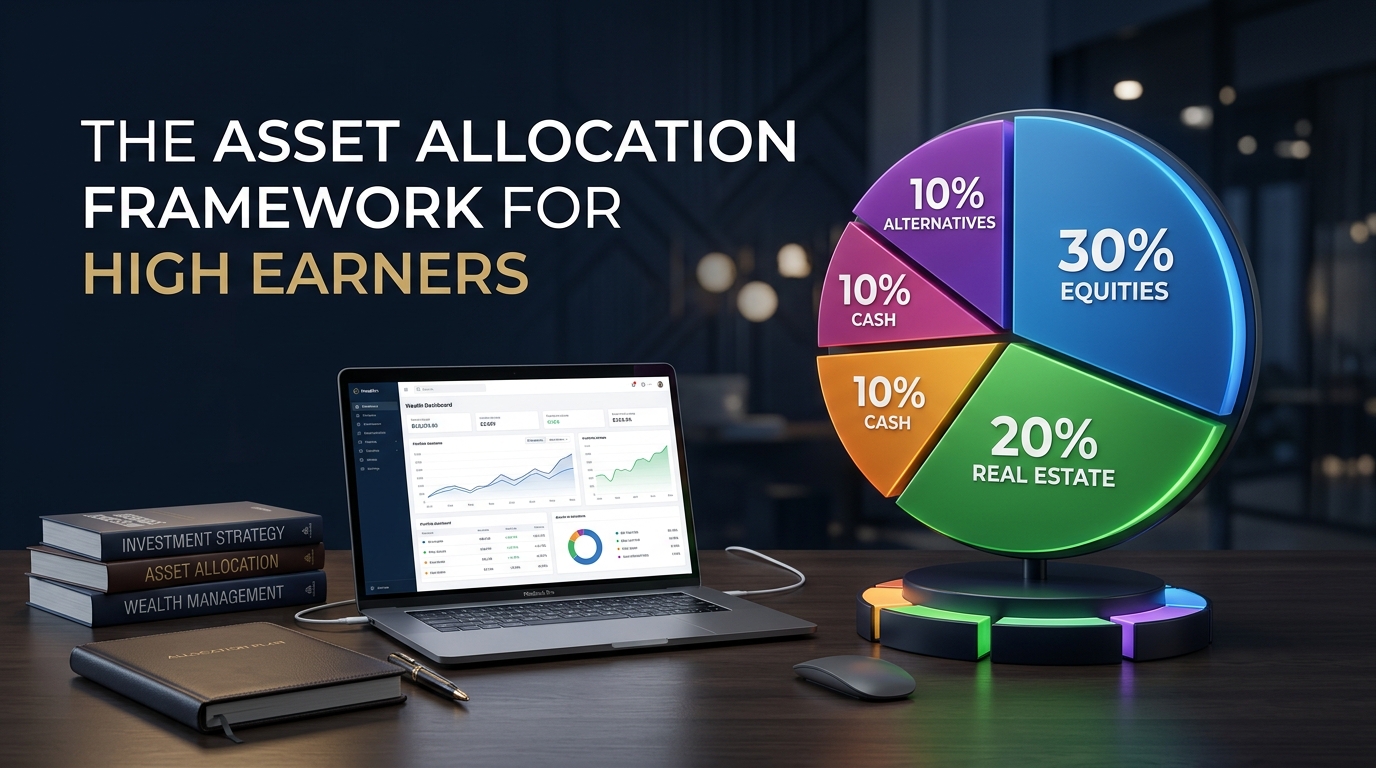
The Asset Allocation Framework for High Earners
How high income turns into enduring wealth through structured capital allocation, risk parity, and illiquid yield reservoirs.
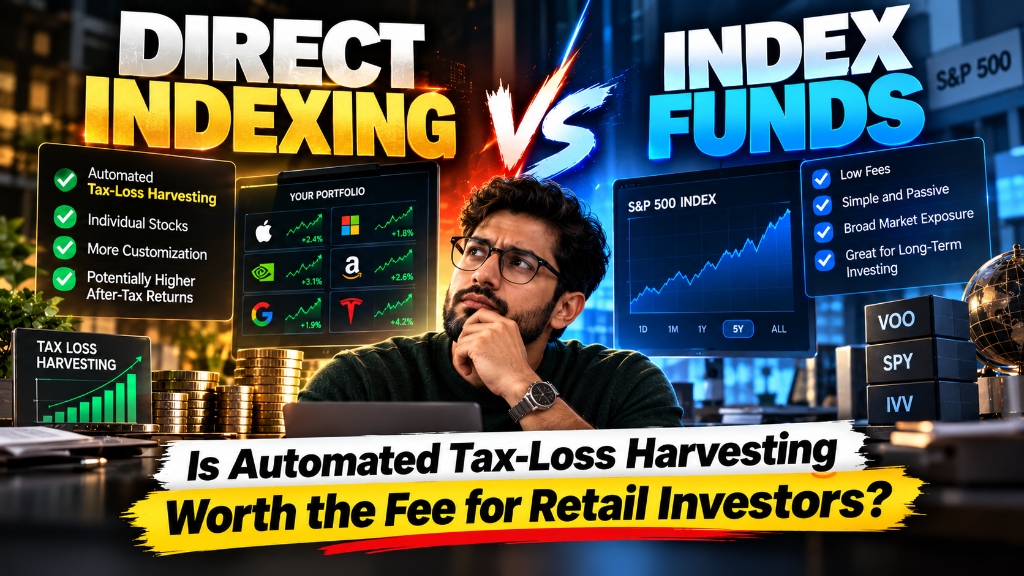
Direct Indexing vs. Index Funds: Is Automated Tax-Loss Harvesting Worth the Fee for Retail Investors?
Compare direct indexing vs index funds tax loss harvesting math. Uncover advisory fee drag, tax alpha decay, account minimums, and tracking error risks.