

The Art of Saying No: Protecting Your Highest-Leverage Time
How top executives decline low-value commitments, set strict calendar boundaries, and protect focus time for high-advantage business activities.

Educational Resource: This guide does not constitute financial or legal counsel.
Protecting your highest-advantage time requires learning the art of saying no to low-value requests, optional meetings, and non-essential commitments. Every time you say yes to a secondary obligation, you implicitly say no to your primary strategic priorities, deep work focus, and personal health reserves.
Saying no effectively is the strategic practice of rejecting low-priority opportunities to preserve cognitive energy for high-advantage activities. Protect your schedule by enforcing strict calendar boundaries, adopting graceful decline templates, and requiring clear agenda justification before agreeing to any meeting.
The opportunity cost of “Yes”
People-pleasing and FOMO (fear of missing out) lead professionals to overcommit their calendars. When your schedule becomes fragmented across 30-minute status calls, casual coffee chats, and non-essential advisory requests, your cognitive capacity for deep strategic thinking evaporates. High performers understand that focus is defined by what you choose not to work on.
| Action Taken | Immediate Trade-Off | Long-Term Consequence |
|---|---|---|
| Saying YES to a Low-Value Meeting | Saying NO to 2 hours of strategic focus | Dilutes energy, stalls core products, and creates calendar clutter |
| Saying NO to Non-Essential Requests | Saying YES to deep work and high-leverage assets | Protects creative momentum and accelerates strategic goals |
The hell yeah or No Framework (Derek Sivers Rule)
When evaluating new opportunities, invitations, or prospective projects, apply Derek Sivers’s operational filter: If an invitation doesn’t make you react with an immediate, enthusiastic “Hell Yeah!”, your default response must be an absolute “No.” Operating in the middle zone of lukewarm acceptances fills your calendar with obligations you resent.
Strategic comparison: Calendar Boundary Models
| Calendar Model | Executive Autonomy | Deep Work Capacity | Stress Level | Business Output |
|---|---|---|---|---|
| Open / Reactive Calendar | Low (10%) | Fragmented (Under 1 Hour/day) | Extreme | Reactive / Low Impact |
| Time-Blocked Hybrid | Moderate (50%) | Moderate (2 Hours/day) | Moderate | Steady Output |
| Defended Horizon Calendar | High (90%) | Maximum (4+ Hours/day) | Low | Asymmetric Compound Output |
How to Defend Your Time in 4 Steps
Constructing a calendar defense system requires setting clear personal boundaries and automated communication filters.
- Establish Non-Negotiable Deep Work Blocks: Schedule 3 to 4-hour morning focus blocks in your calendar as recurring private appointments, treating them with the same sanctity as a board meeting.
- Deploy Graceful Decline Templates: Prepare polite, clear email templates that decline requests without leaving room for awkward negotiation (e.g., “Thank you for thinking of me, but my current project focus prevents me from taking on new commitments right now.”).
- Institute a “No Agenda, No Meeting” Policy: Require any meeting organizer to submit a written 3-sentence goal and agenda 24 hours in advance; decline meetings that lack clear objectives.
- Batch Communication Windows: Check and process email, Slack, and messages twice daily (e.g., 11:30 AM and 4:30 PM), disabling push notifications for all communication apps outside these windows.
Real world case example: Eliminating Meeting Bloat
Consider a Chief Technology Officer spending 28 hours weekly across 18 recurring internal status meetings:
The CTO audits calendar impact and realizes strategic software development has ground to a halt.
The CTO executes a calendar overhaul:
- Replaces 12 weekly 30-minute status meetings with a single async written Slack update thread on Friday mornings.
- Re-allocates 9:00 AM to 1:00 PM Monday through Thursday strictly as protected “Architecture & Engineering Deep Work”.
- Requires all external vendor calls to occur exclusively on Thursday afternoons.
Weekly meeting hours collapse from 28 hours to 6 hours, freeing up 22 hours of deep work weekly and allowing the engineering team to ship a major product release two months ahead of schedule.
Frequently asked questions
How do I say no to a supervisor or key business client without damaging the relationship?
Decline by offering alternatives or requesting priority trade-offs. Say: “I am fully committed to delivering Priority A by Friday. If you would like me to take on Priority B instead, which project should we pause to accommodate it?”
What if I feel guilty when declining social invitations or networking requests?
Remember that setting clear boundaries is a prerequisite for exceptional work and long-term health. People respect leaders who value their time; concise, polite declines build a reputation for discipline and focus.
How do I handle emergency requests that interrupt my protected deep work time?
Define what constitutes a true operational emergency (e.g., server crash, legal notice, major client account risk). Route true emergencies through a specific urgent phone call line while filtering all other non-urgent requests through standard async channels.
Download: The High-Performance Habit & Energy Operating System
An actionable protocol to eliminate procrastination, protect peak cognitive energy, and engineer frictionless daily focus routines.
- Circadian rhythm & deep sleep architecture
- Frictionless time-blocking calendar blueprint
This article and its associated calculators are for educational and informational purposes only and do not constitute financial, investment, legal, tax, or medical advice. We may earn an affiliate commission on third-party links at zero cost to you. Always consult a licensed professional before making major financial, health, or investment decisions. Read our full Legal & Financial Disclaimer.
Kunal Sharma
Verified AuthorKunal shares actionable advice on time management, daily habits, and career growth. He focuses on helping busy professionals organize their days, stay focused, and achieve their goals without burnout.
Was this essay valuable to you?
Help us refine our editorial focus and research priorities.
Reader Discussion (2)
Extremely well-articulated analysis on capital compounding. The breakdown on equity allocation vs active income is spot on.
The distinction between looking rich and building real moats is something more founders need to study deeply.
Explore Eternity Empire
Search empirical insights, explore our four wisdom categories, and discover curated strategic essays.
Search Insights
Recent Essays
The Backyard Cash Flow Engine: How to House Hack with an ADU in 2026
11 min read • Oct 20How to Become a Fractional COO: Landing Your First $5,000/Month Retainer Client
12 min read • Oct 20The Zero-Bounce Outbound Engine: How to Set Up Multi-Domain Cold Email with Instantly and Clay
12 min read • Oct 20Featured Guides
Further Wisdom & Insights
Explore All Articles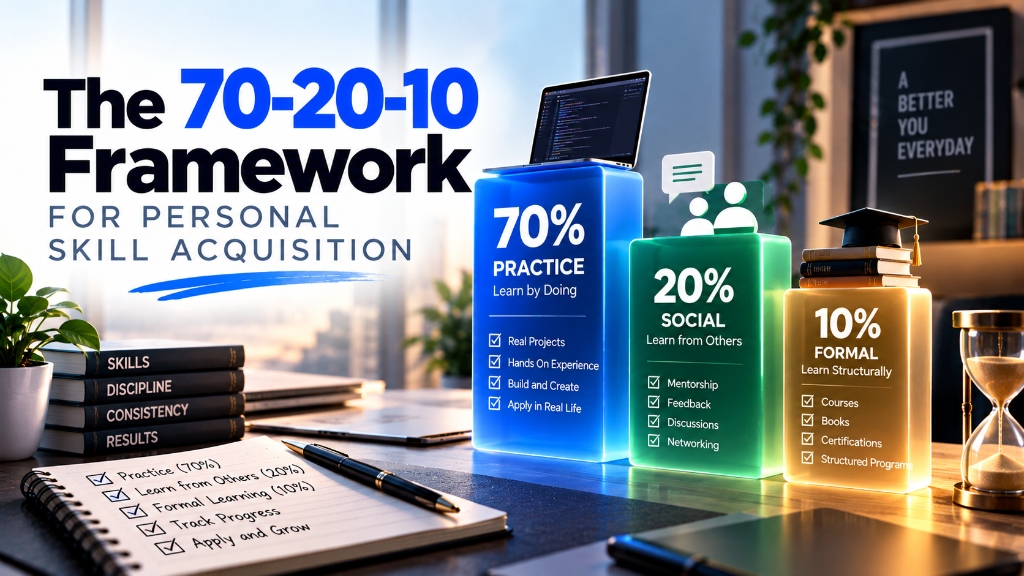
The 70-20-10 Framework for Personal Skill Acquisition
How top performers acquire high-income skills rapidly by balancing real-world execution, mentorship feedback, and formal theory.
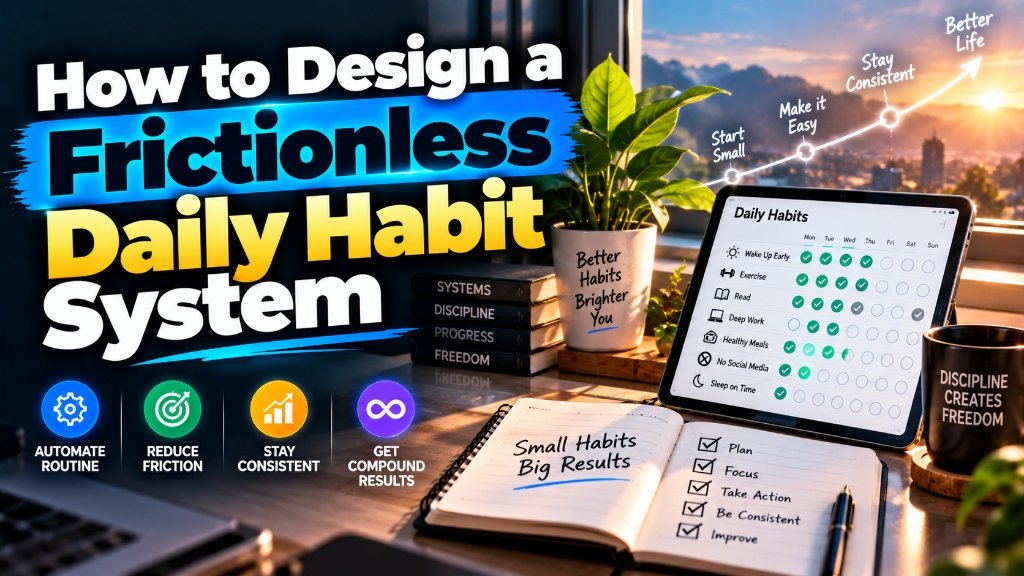
How to Design a Frictionless Daily Habit System
How to build high-performance daily habits by reducing environmental friction, utilizing habit stacking, and tracking streak velocity.

How to Audit and Optimize Your Personal Energy Levels
How high performers manage circadian rhythms, track cognitive energy peaks, and build active recovery protocols for sustained output.